
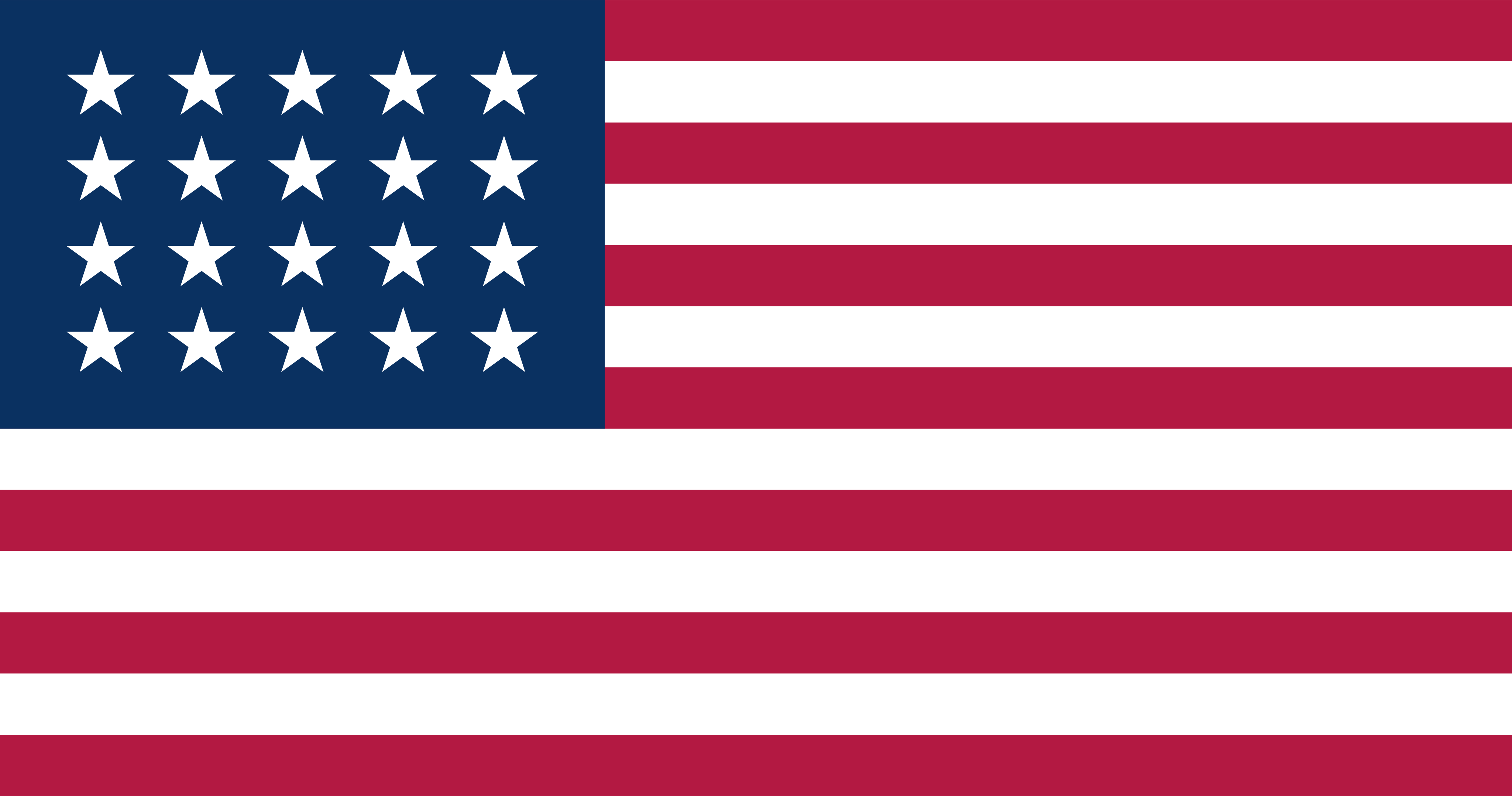
"Old Glory" sounds like a nickname someone made up for the flag in general. In truth, it began with a single banner and one man's lifelong devotion to it. That flag survived ocean voyages, a Confederate manhunt, and even a divided family, and you can still see it today.
A captain and his flag
William Driver was a merchant seaman from Salem, Massachusetts. He went to sea young and rose quickly, taking command of his own ship, the Charles Doggett, while still in his early twenties. Around 1831, as he prepared for another long voyage, friends and family presented him with a large, handsome American flag.
As the flag climbed the mast and caught the wind for the first time, Driver is said to have called out the name that would stick for the rest of his life and far beyond it: "Old Glory." From then on, the flag sailed with him. It flew over voyages that carried him across the Pacific, and it was aboard when the Charles Doggett famously helped return a group of Pitcairn Islanders, descendants of the Bounty mutineers, to their home.
Hidden in plain sight
Driver eventually retired from the sea and settled in Nashville, Tennessee. He kept Old Glory with him, flying it on holidays and patriotic occasions. Then came the Civil War, and Nashville fell under Confederate control.
Union flags were not welcome, and Confederate sympathizers were determined to find and destroy Driver's now-famous banner. So Driver hid it. According to the cherished account, he had Old Glory sewn into a bedcover, where it lay concealed and protected while soldiers searched for it in vain.
The flag that had crossed oceans now had to survive by hiding in a quilt.
The hardest part may have been closer to home. Like much of the country, Driver's own family was split by the war, with loyalties divided between North and South. He guarded his flag through all of it.
Raised over the Capitol
In February 1862, Union forces captured Nashville. Driver retrieved Old Glory from its hiding place, carried it to the Tennessee State Capitol, and saw it raised above the building. The aging sea captain reportedly told the soldiers that he had always wanted to see Old Glory wave over that statehouse, and now he had.
The original Old Glory was later passed down through Driver's family and eventually given to the nation. It is preserved today in the collection of the Smithsonian Institution, fragile but intact, the literal flag behind the nickname.
Over time, "Old Glory" outgrew its single banner and became a name for the Stars and Stripes itself. But it is worth remembering that the phrase was born from one captain's devotion, and from a flag that endured the seas, a war, and a divided household, and came through it all still flying.