
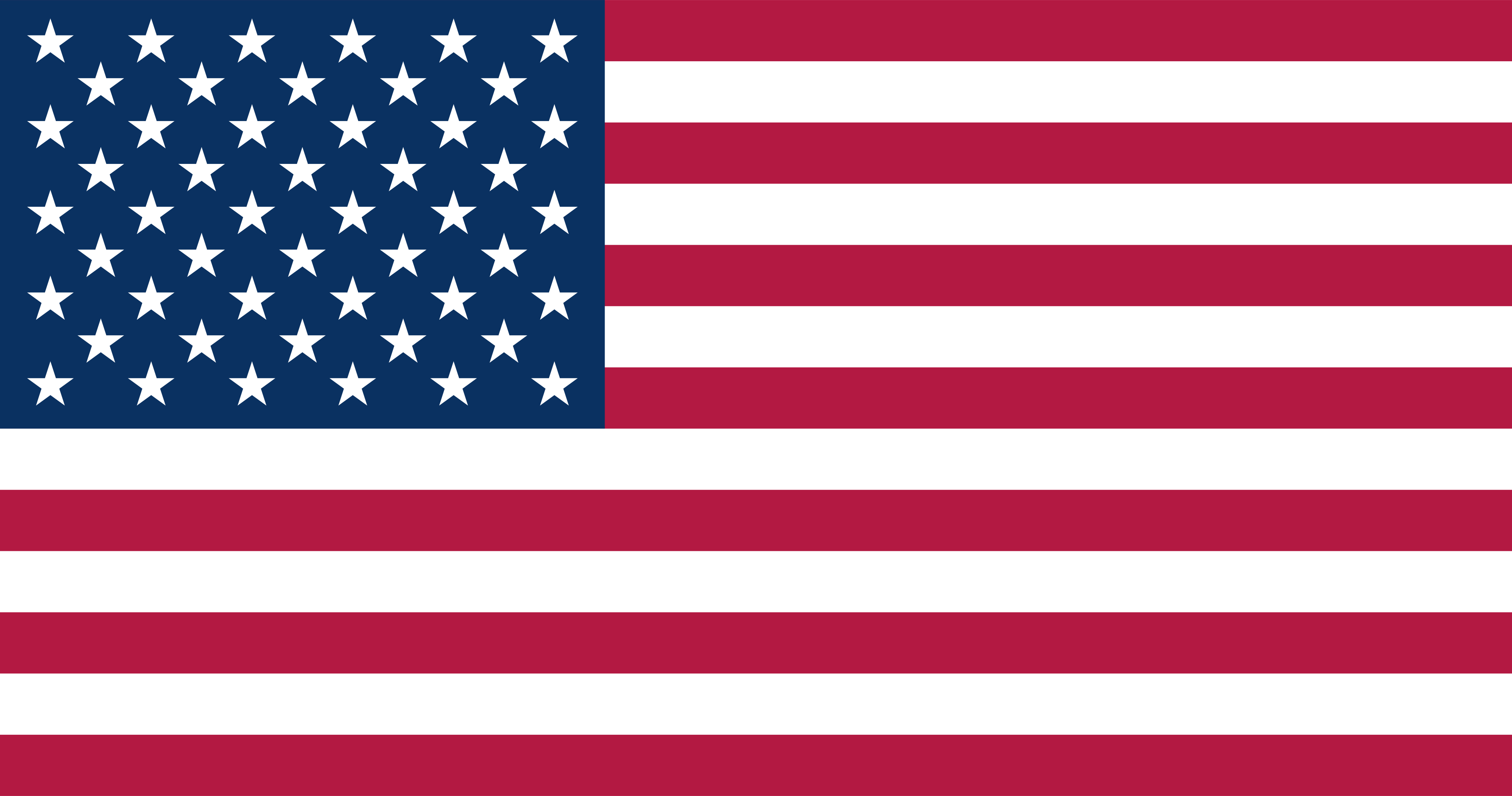
The flag flying over your town today was designed by a 17-year-old for a high school assignment. He got a B minus for it. The story of how that grade became an A is one of the great underdog tales in American history.
It was 1958, and Robert G. Heft was a junior at Lancaster High School in Ohio. His history teacher, Stanley Pratt, gave the class an open-ended assignment: make something, anything, and bring it in. Most students chose something safe. Heft decided to redesign the flag of the United States.
Twelve hours and a borrowed sewing machine
At the time, the flag carried 48 stars. But Alaska and Hawaii were knocking on the door of statehood, and Heft reasoned the flag would soon need to grow. So he set out to build a 50-star version before it officially existed.
Working at his grandparents' kitchen table, he spent more than twelve hours on the project. He bought a few dollars' worth of blue cloth and white iron-on material, cut out one hundred stars by hand, fifty for each side, and arranged them in the alternating rows of five and six that Americans would come to know by heart. Then he stitched the whole thing together on his grandmother's sewing machine.
The B minus
When Heft turned it in, Pratt was unimpressed. The flag did not match the country's 48 stars, the teacher pointed out, and the design was not exactly original. He gave it a B minus.
Heft pushed back. Pratt, perhaps sensing the teenager's conviction, made him an offer that would become legend: if Heft could get his flag accepted by Congress, the grade would be changed.
Get it accepted in Washington, the teacher said, and I will change the grade.
From a kitchen table to the Capitol
Heft took the challenge seriously. He sent his flag to his congressman and began a steady campaign of letters and calls. Then history caught up with his design. Alaska became a state in January 1959, and Hawaii followed that August. Suddenly the country needed a 50-star flag, and submissions poured in by the thousands.
President Dwight D. Eisenhower selected a design identical to the one Heft had sewn in his grandparents' kitchen. On July 4, 1960, the 50-star flag became official. It has flown ever since, the longest-serving version of the American Flag in the nation's history.
And the grade? Pratt kept his word. The B minus became an A.
Heft went on to become a teacher himself, and later a mayor, spending much of his life speaking to students and civic groups about the flag. His message rarely changed: take the assignment seriously, believe in your work, and never assume the country has no room for a kid with a good idea and a sewing machine.