
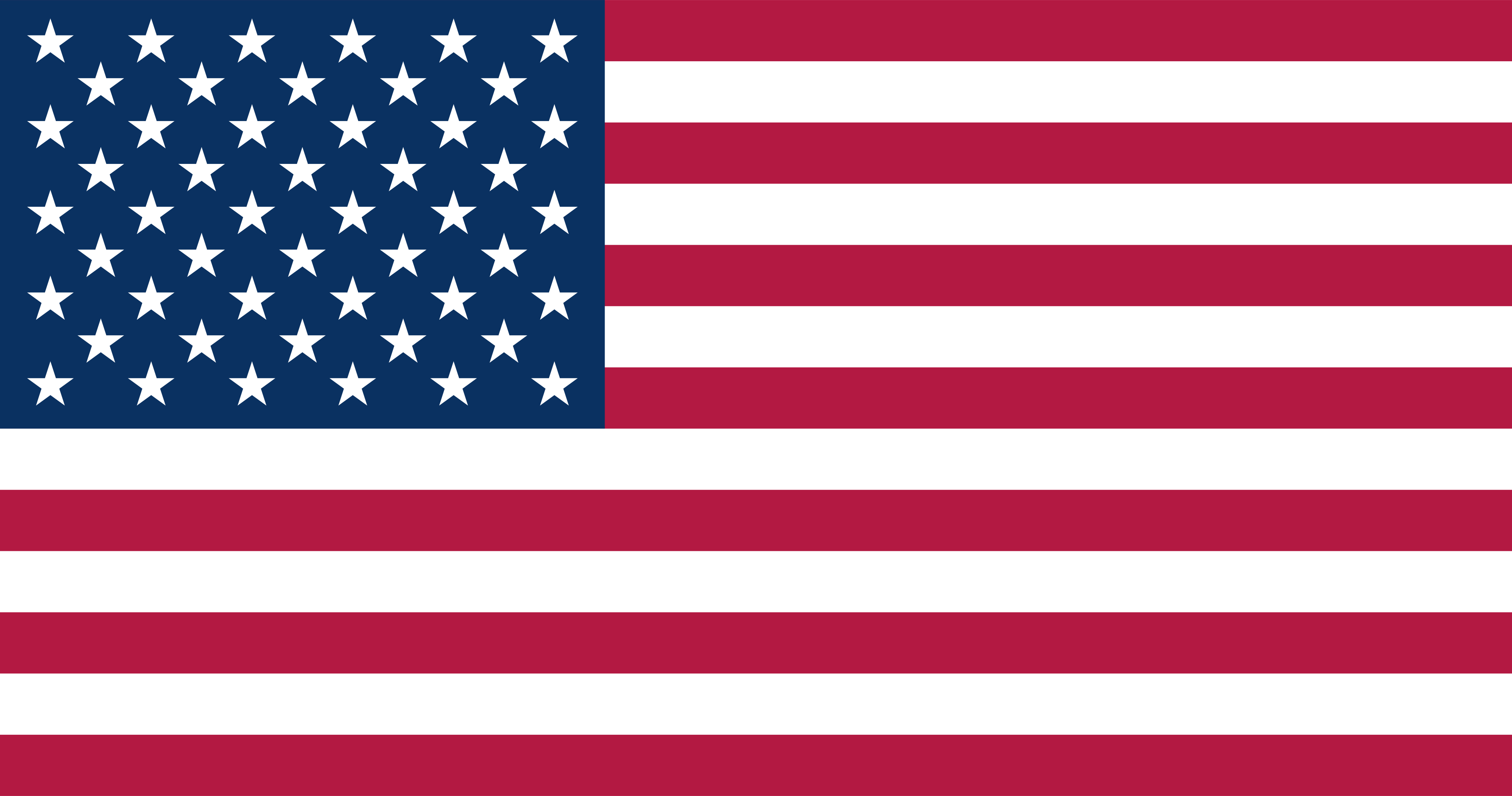
Every flag reaches the end of its service. Sun fades the stripes, wind frays the fly end, and one day the flag on your porch is no longer the emblem it was. The U.S. Flag Code is clear about what to do next, and doing it well takes less effort than most people expect.
What the Flag Code says
Section 8(k) of the United States Flag Code says it in a single sentence: "The flag, when it is in such condition that it is no longer a fitting emblem for display, should be destroyed in a dignified way, preferably by burning."
Two words in that sentence carry the weight. "Dignified" means the retirement is treated as a ceremony, not a chore. "Preferably" acknowledges that burning is the tradition, not the only acceptable method. A flag retired with care and respect has been retired correctly.
The retirement ceremony
The most familiar version of the ceremony comes from The American Legion, which formally adopted a flag retirement ritual in 1937 and has conducted it ever since, most visibly on Flag Day, June 14. A typical ceremony folds the flag into its traditional triangle, presents it a final time, and commits it respectfully to a fire built for the purpose. Participants often salute or hold a moment of silence as the flag burns completely to ash, and the ashes are then buried.
A flag retirement is not a disposal. It is a thank you.
You do not need to be a veteran or a member of any organization to attend one. Many posts open their Flag Day ceremonies to the public, and Scout troops frequently conduct retirements at camporees and community events. Watching one is one of the better civics lessons available anywhere.
The easiest option: hand it off
If you are not equipped to retire a flag yourself, give it to people who are. All of these routinely accept worn flags, usually at no charge:
- American Legion posts. The Legion has thousands of posts nationwide, and flag retirement is part of its core mission. Find a post near you at Legion.org.
- VFW posts. Veterans of Foreign Wars posts collect flags year-round for ceremonial retirement.
- Scout troops. Flag retirement is a long-standing Scouting tradition, and troops welcome flags from the community.
- Civic drop boxes. Many city halls, county offices, libraries, Elks lodges, and flag or hardware retailers maintain flag collection boxes.
A note on nylon and polyester flags
The Flag Code was written in an era of cotton and wool. Most flags sold today are nylon or polyester, and burning synthetics releases unpleasant and potentially harmful fumes. For that reason, many retirement programs now separate synthetic flags and retire them by other dignified means, including respectful burial or specialized recycling programs that reclaim the material.
The principle does not change with the fabric. If your flag is synthetic, hand it to a program equipped for it rather than burning it in the backyard.
If you retire a flag yourself
A private retirement at home is entirely proper if it is done with intention. Fold the flag, build a fire sufficient to consume it fully, place the flag on the fire with care, and stay with it until nothing recognizable remains. Bury the ashes afterward. Some families say the Pledge of Allegiance or simply stand quietly. There is no script you must follow; there is only the standard of dignity the Code asks for.
When is a flag ready for retirement?
Sooner than most people retire them. A flag with significant fading, fraying, tears, or stains that cannot be repaired or cleaned is no longer a fitting emblem for display. Minor fraying can be trimmed and hemmed, and a dirty flag can be washed or dry-cleaned, so repair is always worth considering first. But a flag flown to tatters honors no one. Replacing it is itself an act of respect.
For the full rules on display, handling, and respect for the flag, see our complete guide to the U.S. Flag Code, or explore the history behind the flag itself in The Flag.